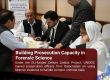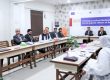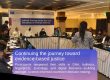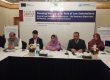
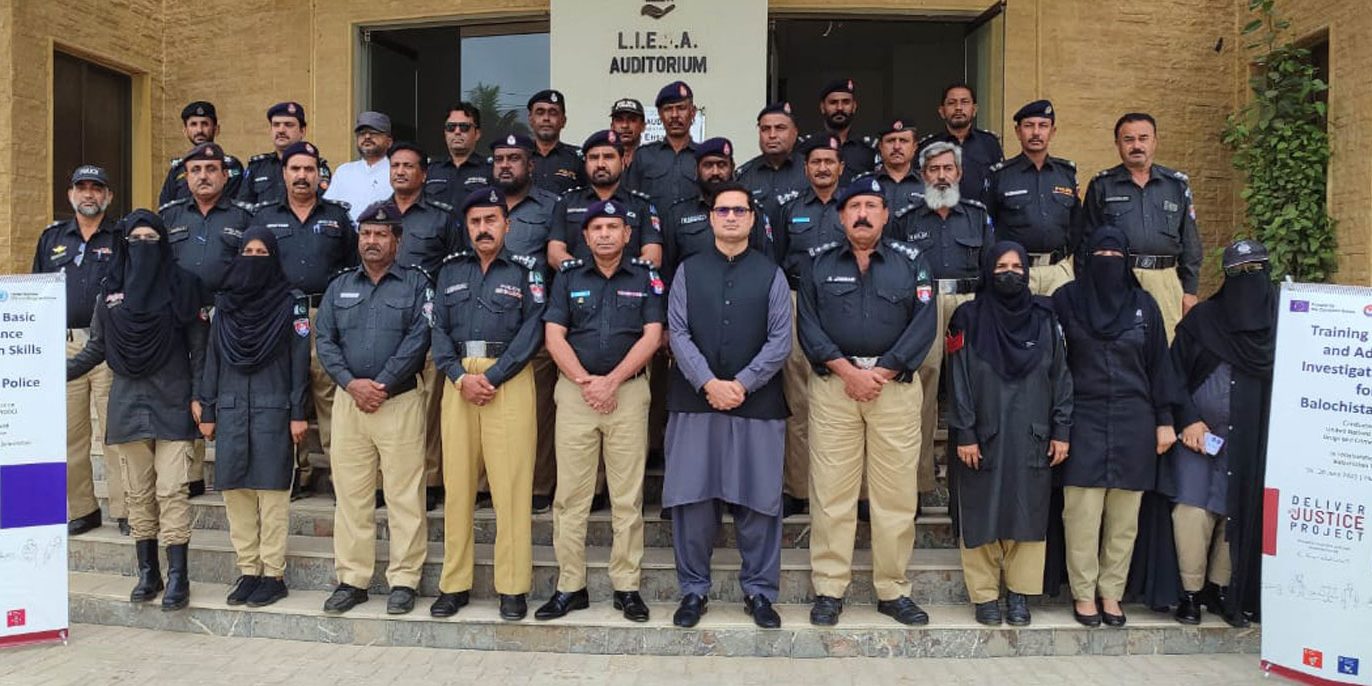
25 July 2025, Balochistan – The United Nations Office on Drugs and Crime (UNODC), with funding from the European Union’s Deliver Justice Project, has successfully concluded two rounds of intensive week-long training on ‘Basic and Advance Investigation Skills’ for investigation officers from the Balochistan Police and Levies Force. Held from 16th to 20th June 2025 and 21st to 25th July 2025 in districts Hub and Zhob respectively, the training aimed at enhancing the skills of 60 local law enforcement officials including 10 female officials, with the knowledge and tools to conduct more efficient and effective investigation, ultimately ensuring justice and enhancing public safety.
The training program was a comprehensive effort to build core competencies in several crucial areas of criminal investigation. The sessions covered a wide array of topics, from lodging of FIR and crime scene management to forensic evidence handling procedures, medico legal and postmortem examination followed by the interview and interrogation techniques. A special emphasis was placed on the responsibilities of IOs in handling medico-legal and postmortem examinations with accuracy, timeliness, and professionalism. Moreover, interpretation and incorporation of forensic analysis reports in case files especially in gender-based violence, homicide and narcotics cases for the flawless submission of challan was also highlighted in the training.
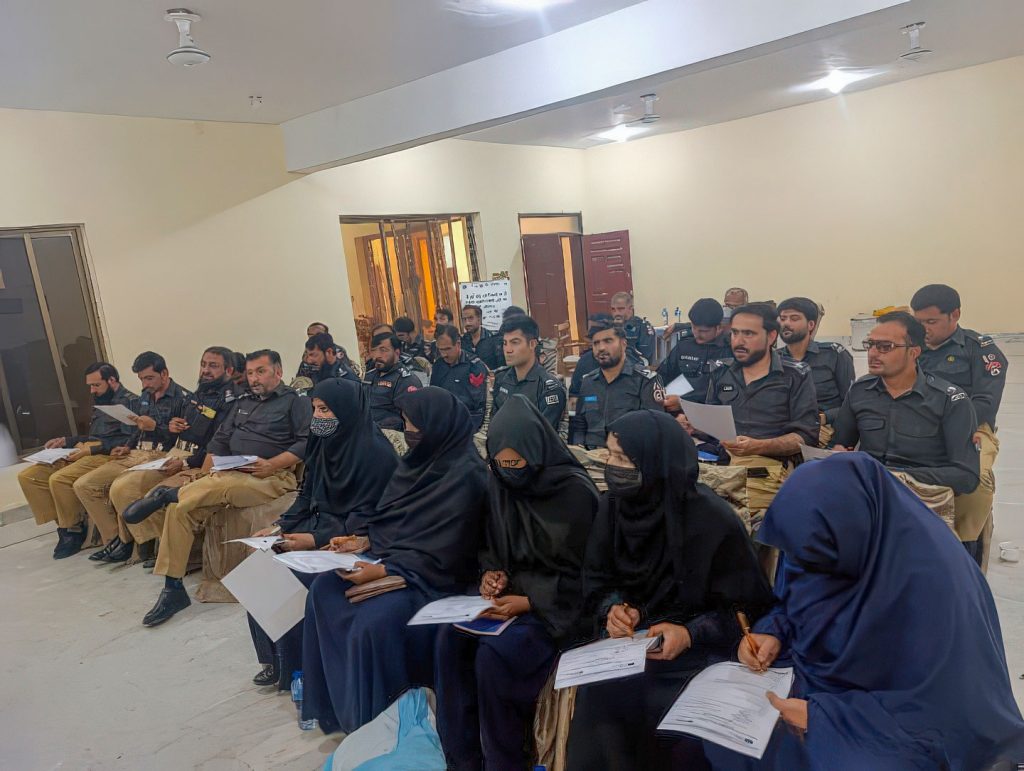
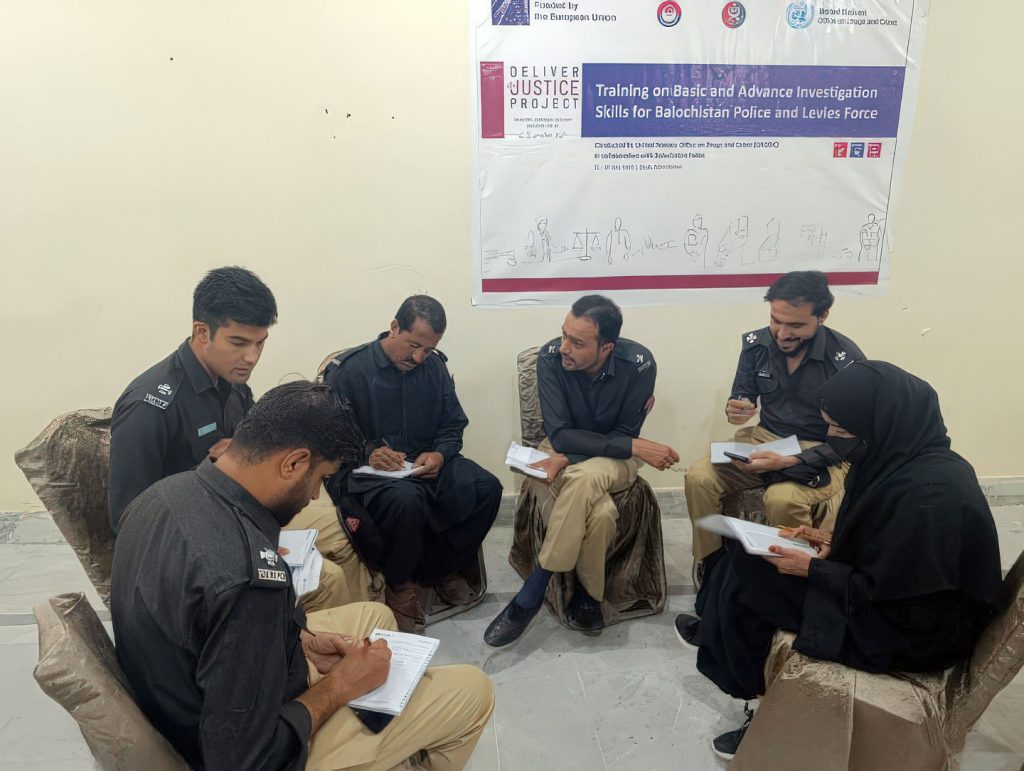
One of the standout features of the training was the balance between theoretical instruction and practical application. The use of real-life case examples and hands-on activities, such as mock crime scene analysis, evidence packaging, maintaining chain of custody and documentation practice significantly enhanced participants engagement. Additionally, the incorporation of emerging subjects like digital evidence handling and its chain of custody mechanisms gave participants the modern tools required to manage effective investigation.
The participation of women officials in the training highlighted the commitment of UNODC and the European Union to promote gender equality within law enforcement. The inclusion of female ensures that law enforcement practices in Balochistan are more inclusive and representative of the communities they serve.
In the end, the certificates were distributed by the Senior Superintendents of Police (SSPs) of district Hub and Zhob where they emphasized the importance of continuous learning and urged the trainees to apply their newly acquired knowledge in their daily duties, contributing to a more efficient and fair criminal justice system in the province.