
7 August 2025, Lahore – As part of its broader effort to support rule of law and criminal justice reform in Pakistan, the United Nations Office on Drugs and Crime (UNODC), with funding from the European Union under the Deliver Justice Project, concluded a three-day training on “The Role and Reliability of Forensic Evidence in Criminal Trials” for judicial officers from Balochistan.
Held from 5 to 7 August 2025 in Lahore, the training was designed to enhance judges’ understanding of key forensic disciplines and their ability to apply scientific evidence in court, particularly in serious crime cases involving gender-based violence (GBV), and complex criminal matters.
Over the three days, participants engaged in practical case review exercises, simulation-based activities, and thematic sessions covering DNA, ballistics, digital forensics, biological evidence, and trace analysis. These sessions were delivered by leading national experts in forensic law and crime scene management, offering insights into both technical procedures and courtroom application.
A highlight of the training was a guided study tour to the Punjab Forensic Science Agency (PFSA), Pakistan’s premier forensic institution. This orientation provided participants with hands-on exposure to laboratory procedures, chain-of-custody protocols, and evidence analysis workflows. The visit fostered inter-provincial knowledge exchange, allowing judicial officers from Balochistan to engage directly with PFSA experts and observe high-impact forensic systems that can inform similar developments in their home province.
The training emphasized the importance of harmonizing judicial practices across regions and highlighted the role of inter-provincial coordination in improving the quality and consistency of justice delivery. Participants discussed how insights from Punjab’s institutional framework, especially in areas like digital evidence, ISO-certified labs, and multidisciplinary forensic teams, could be adapted for use in Balochistan to improve judicial outcomes and ensure fact-based rulings.
In addition to legal interpretation, sessions also addressed the challenges of assessing expert testimony, ensuring forensic integrity during trial, and strengthening synergy between the judiciary and forensic institutions.
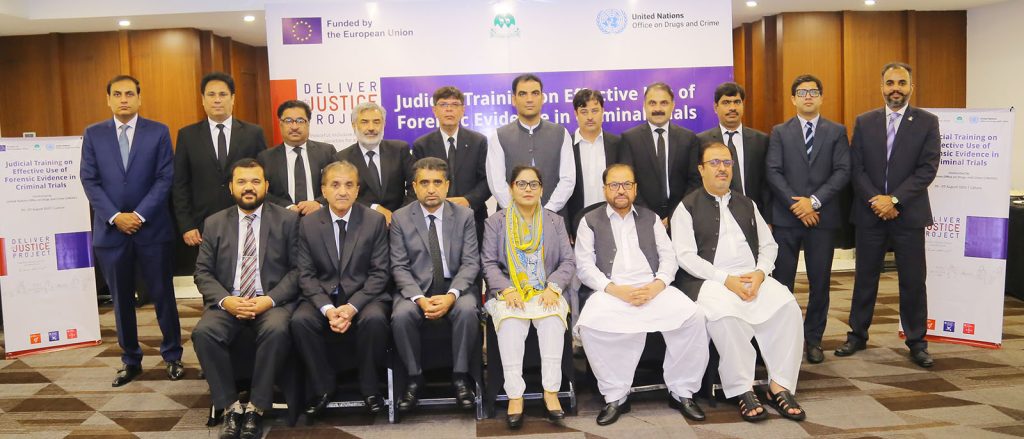

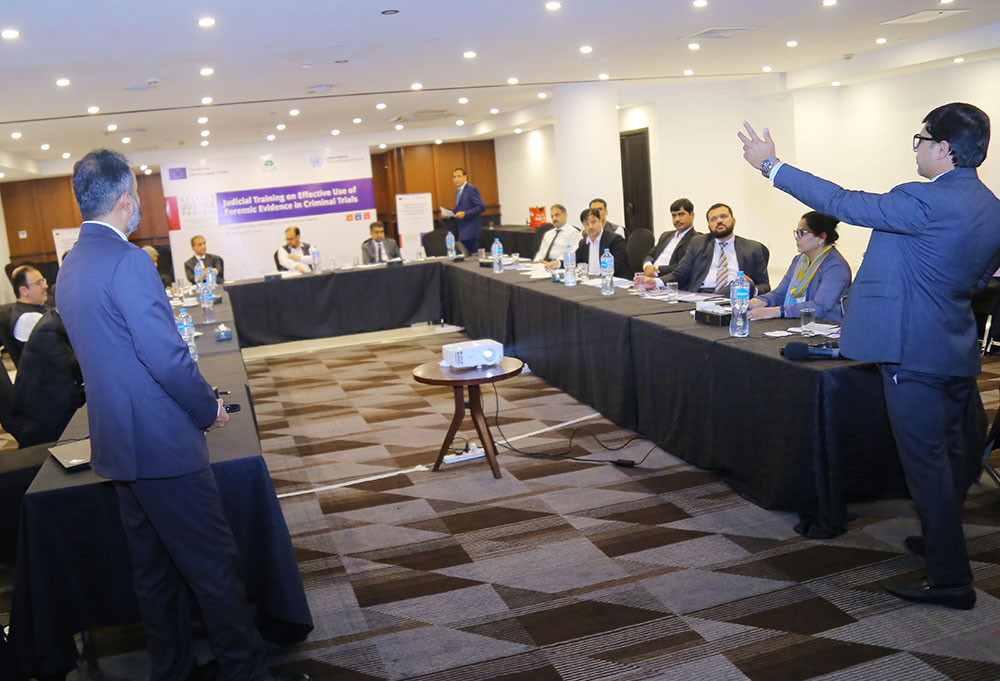
This initiative forms a core part of UNODC’s strategic support to Pakistan’s judiciary under the Deliver Justice Project, which aims to build fair, inclusive, and evidence-driven justice systems. By improving judges’ capacity to evaluate forensic evidence accurately and consistently, the training contributes to upholding due process rights, increasing public trust, and reducing reliance on circumstantial or unreliable testimonies.
As the first in a series of four planned trainings, the 5 to 7 August session marked a significant step in advancing judicial excellence in Balochistan. With ongoing technical support and a strong focus on cross-provincial collaboration, UNODC and the European Union are committed to enabling sustainable, high-quality justice delivery across Pakistan’s most underserved regions.