
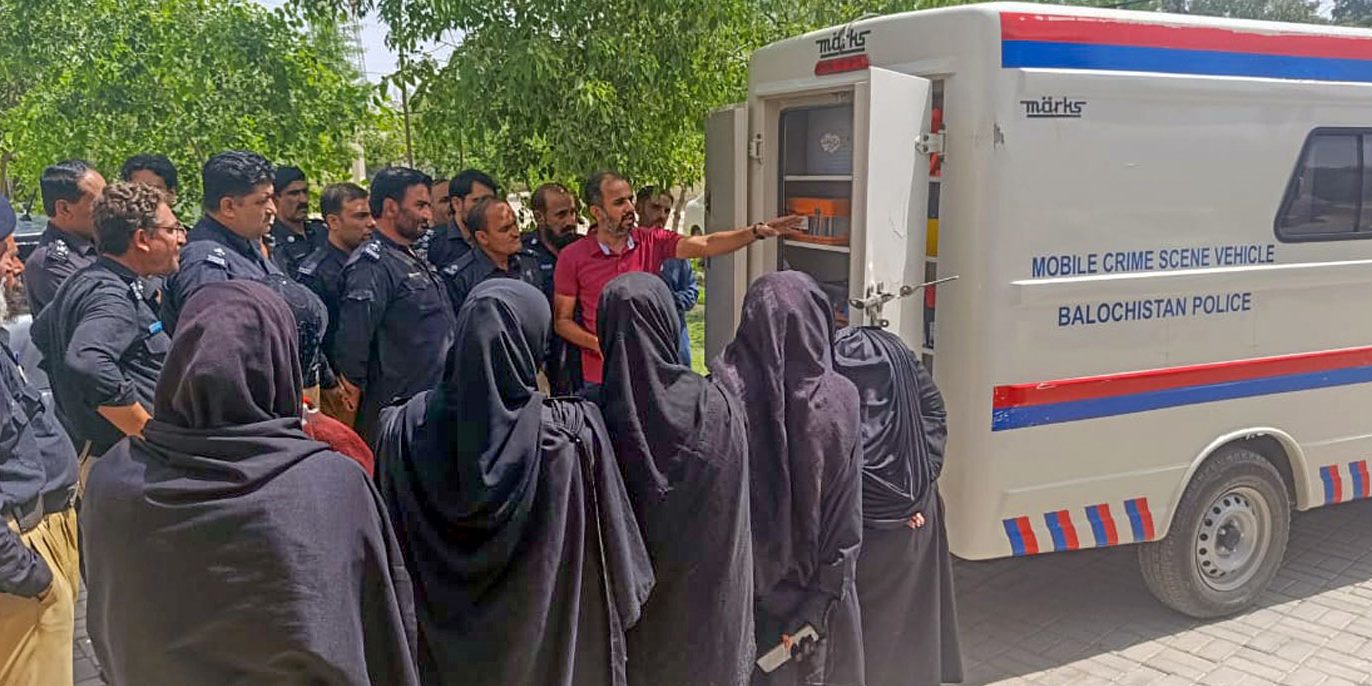
25 July 2025, Balochistan – The United Nations Office on Drugs and Crime (UNODC), with funding from the European Union’s Deliver Justice Project, has successfully concluded two rounds of three days training on ‘Effective Handling of Forensic Evidence in Criminal Investigation’ for investigation officers from the Balochistan Police and Levies Force. Held from 08th to 10th July 2025 and 29th to 31st July 2025 in districts Gwadar and Loralai respectively, the training aimed to build operational expertise of 53 Investigation Officers including 14 female officers on proper evidence handling and digital investigation techniques to improve the quality and credibility of criminal investigations.
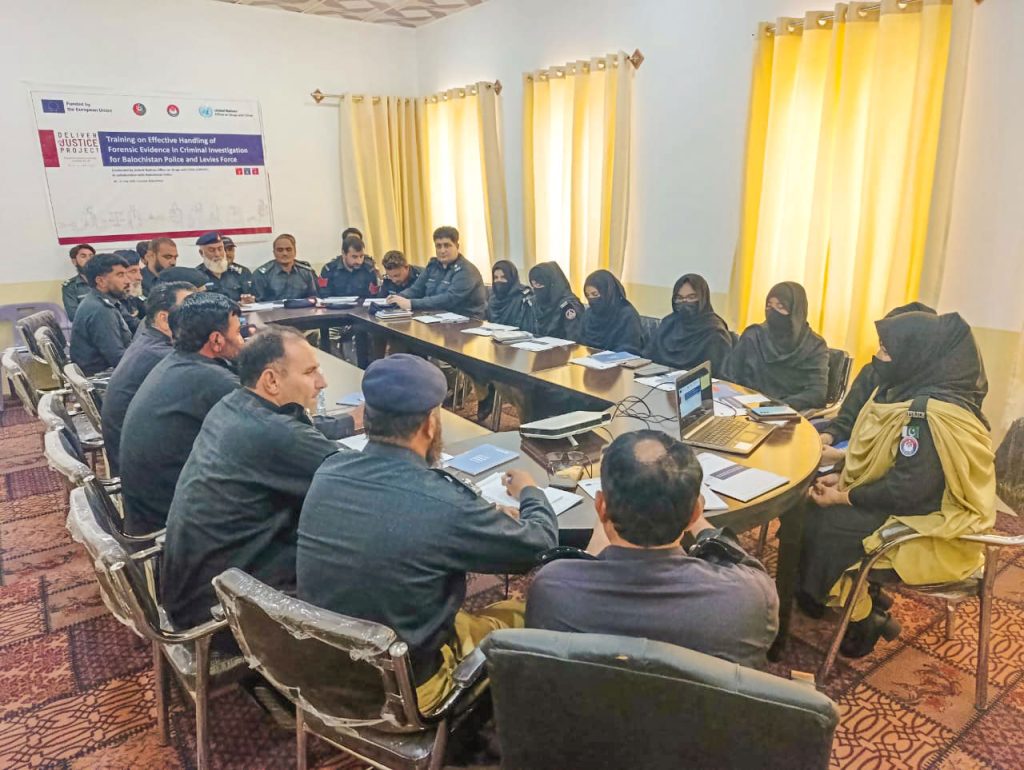
The training commenced with a formal inauguration and keynote speech addressed by the Senior Superintendents of Police (SSPs) of districts Gwadar and Loralai. The foundational sessions introduced participants to the core principles of forensic science, highlighting its multidisciplinary nature and pivotal role in supporting law enforcement agencies in evidence-based investigations. A focused module on DNA and its importance in criminal investigations provided detailed instruction on identifying, collecting, and preserving biological evidence such as blood, saliva, hair, and epithelial cells. The participants were trained to manage these materials in accordance with the best forensic practices to ensure their integrity and admissibility in court.
The participants received technical knowledge on the handling and examination of firearms and toolmarks. The session provided a practical understanding of ballistics, weapon identification, and the forensic linking of projectiles and cartridge cases to specific firearms. The significance of gunshot residue (GSR) analysis was also emphasized, illustrating its critical value in determining whether a suspect was discharged or was in proximity to a firearm during an incident. These sessions were grounded in real-world relevance and delivered through expert-led lectures supported by case-based discussions.
The subsequent modules addressed the role of forensic evidence in investigations, reinforced through the study of actual case files where scientific evidence plays a decisive role in securing convictions or dismissing wrongful charges. The trainees learned the effective handling of biological evidence with a focus on contamination prevention, proper packaging, and safe storage. Equally emphasis was made on the concept of chain of custody, a foundational element in preserving the integrity of evidence from collection to courtroom presentation. The participants learned how to meticulously document the movement of evidence through each procedural stage, supported by the use of standardized forms and logs.
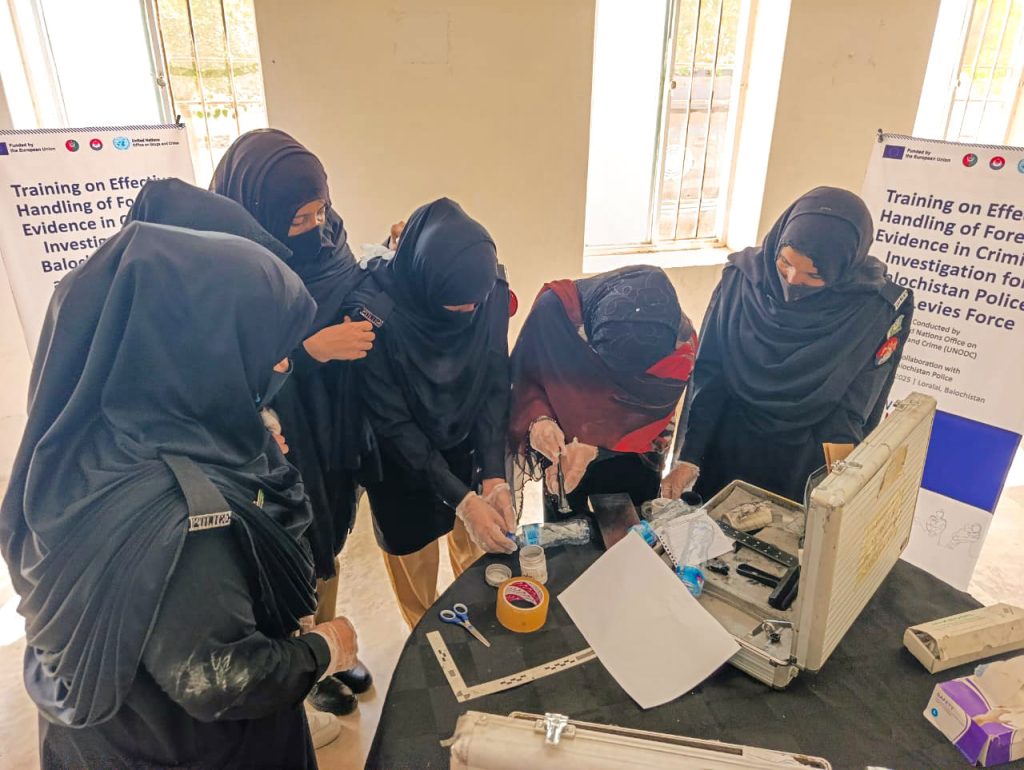
In addition to the evidence handling, the training also focused on accurate documentation methods, including labeling, sealing, and evidence submission protocols. This was complemented by an overview of various forensic disciplines such as toxicology, trace evidence, and questioned document analysis. Through instructor-led simulation exercises, the participants engaged in hands-on practical sessions involving mock crime scenes. These exercises allowed them to apply theoretical concepts in a controlled environment, reinforcing their procedural understanding and operational readiness. The detailed instruction on the evidence submission process and forensic laboratory workflows was also provided to ensure clear communication and coordination between investigators and forensic analysts.
A critical component of the training was the integration of digital evidence handling into conventional investigative procedures. The participants were introduced to the fundamentals of digital forensics, including the lawful extraction and preservation of data from mobile devices, computers, and online platforms. They were guided on incorporating digital evidence into the case investigation file in a way that maintains evidentiary value and legal clarity. This included techniques for presenting digital findings in alignment with physical evidence and witness testimony. The key sessions included the analysis of Call Detail Records (CDRs) and the application of Geofencing technology. The trainees learned how to extract and interpret telecommunication data to establish timelines, identify communication patterns, and track suspect movements.
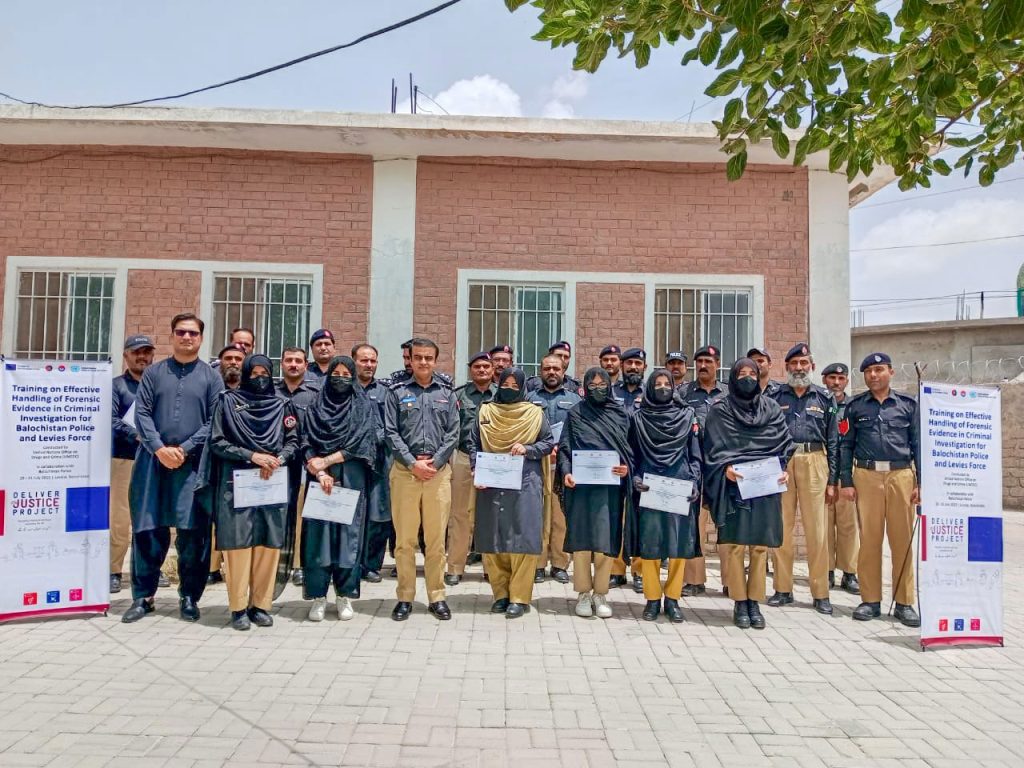
As part of the closing activities, participants reviewed all key learning areas and undertook a comprehensive post-assessment to evaluate knowledge acquisition and applied competencies. The training concluded with a formal graduation ceremony, during which SSPs of district Gwadar and Loralai awarded certificates to the participants.
This training initiative underscored the UNODC and European Union’s commitment in institutionalizing scientific approaches within the investigative functions of Balochistan Police and Levies, enhancing their ability to conduct legally sound, technically proficient, and transparent investigations to ensure the delivery of justice.