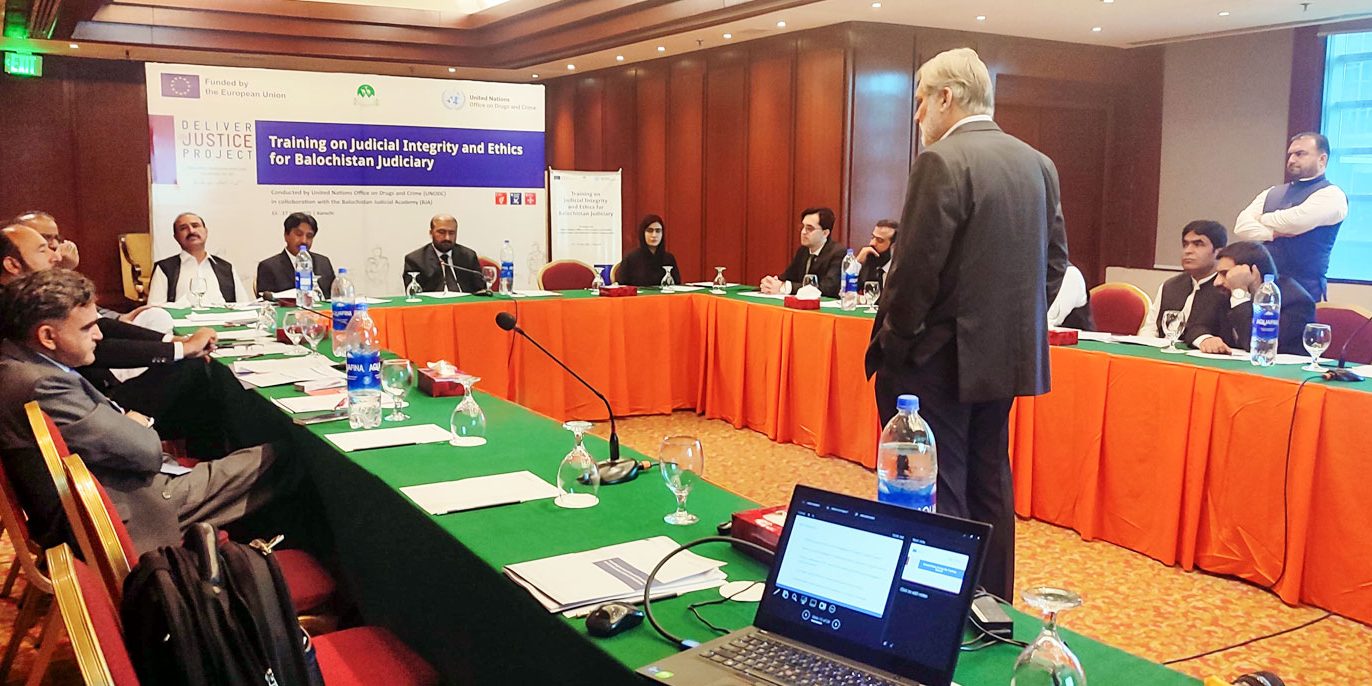
18 July 2025, Balochistan – The United Nations Office on Drugs and Crime (UNODC) is committed to promoting integrity and transparency in Pakistan’s justice sector. Under the ongoing Deliver Justice Project funded by the European Union, UNODC organized two dedicated capacity-building workshops on ‘Judicial Integrity and Ethics’ bringing together a cross-section of judges from Balochistan.
The workshops brought together 29 judges, including five female judges, from over 20 districts across Balochistan. The sessions equipped participants with practical tools to enhance ethical decision-making, address conflicts of interest, and reinforce the principles of judicial independence, impartiality, and accountability.
Rooted in the internationally recognized Bangalore Principles of Judicial Conduct, the training modules were tailored to reflect the contextual challenges faced by the judiciary in Balochistan. With a focus on real-world applications, the sessions blended expert-led instruction with interactive discussions, enabling judges to examine ethical dilemmas through case studies, scenario-based learning, and peer exchange.
A unique feature of the training was its emphasis on digital conduct and gender-responsive judicial practices, recognizing the evolving landscape of justice delivery and the need for inclusivity and accountability in all aspects of judicial work.
“This training reminded us that judicial integrity is not just about compliance with the law—it is about leadership, fairness, and setting a standard for society,” reflected one participant.
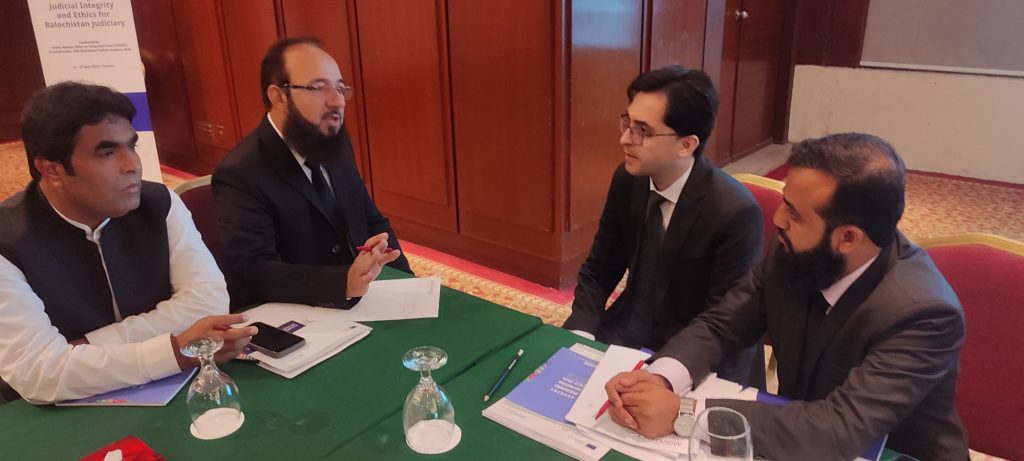
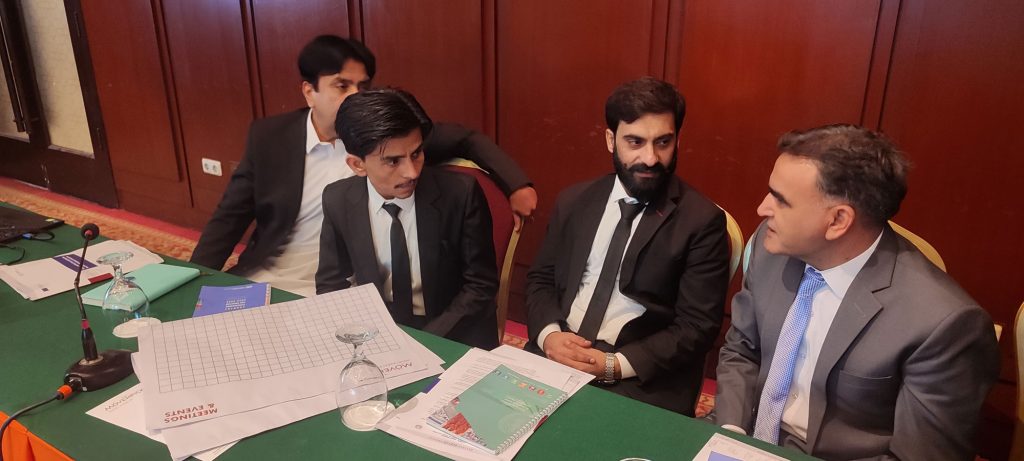
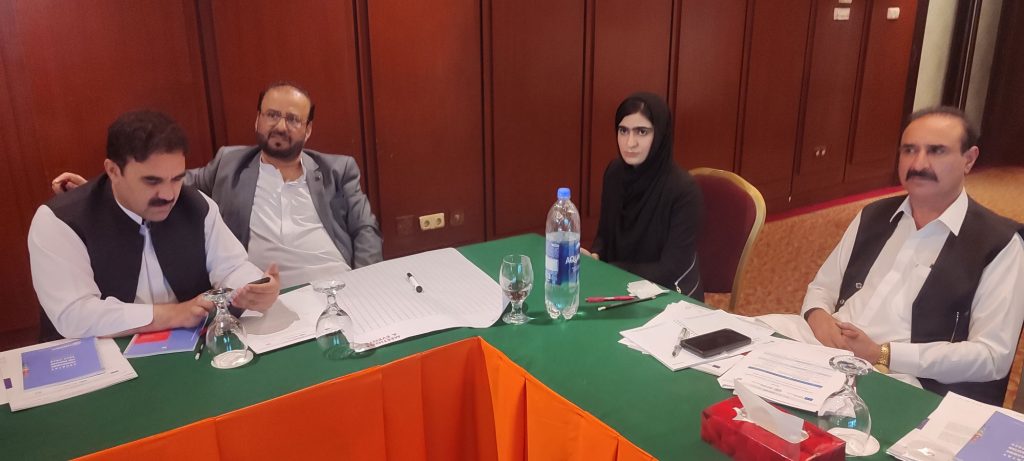
The workshops encouraged participants to think critically about the broader impact of judicial behavior, including the role of public perception and trust in the justice system. By exploring nuanced issues such as unconscious bias, the responsible use of social media, and gender-sensitivity in courtrooms, the sessions highlighted the multidimensional nature of integrity in the modern judiciary.
Delivering remarks at one of the sessions, Ms. Una Kelly, First Secretary for Rule of Law at the European Union Delegation to Pakistan, underscored the importance of judicial integrity as a pillar of democratic governance. She stated, “Judicial integrity is foundational to the rule of law. Through our partnership with UNODC, the European Union is proud to support the judiciary in Balochistan to build stronger, more transparent, and accountable institutions that citizens can trust.”The workshops reflect a broader commitment under the Deliver Justice Project to strengthen institutional performance across Pakistan’s justice sector. By engaging directly with judicial officers from Balochistan, UNODC and the European Union aim to foster a culture of ethical leadership and institutional resilience at the provincial level, ensuring that the justice system remains responsive to the needs and rights of all citizens.